“Nurture your sense of what’s possible, we cannot create what we cannot imagine.”
-Lucille Clifton
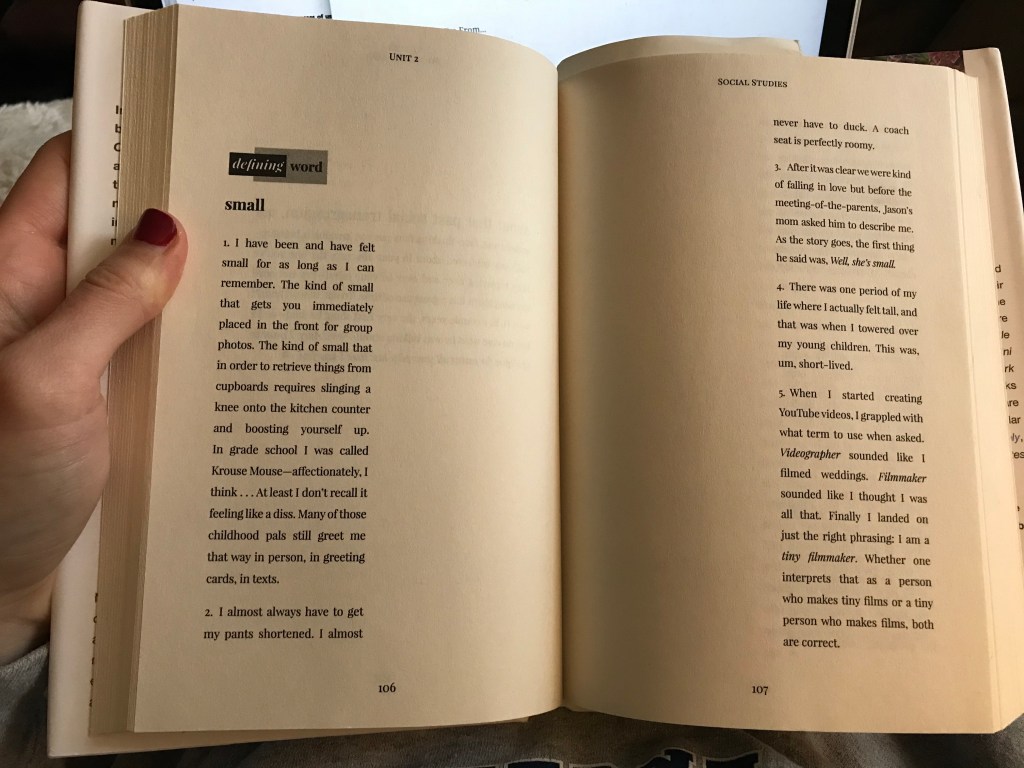
As a writer myself, I sometimes find it difficult to write from thin air. I like to have inspiration, or models to choose to write from. I like using Amy Krouse Rosenthal’s book as inspiration and mentor text for my writing. As I am reading her book, I often find myself thinking ‘Oh I have experienced that before!’ or ‘Wow. This is hilarious. This is something I know well.’
This week, when I was reading Amy’s section titled ‘Social Studies’, I really related to her Defining Word: Short. Amy’s journal entry is all about the many experiences she has of being short. Even though I am not short myself, I am very tall for a female. So I used Amy’s idea of ‘Defining Word: Short’ and wrote my own journal entry ‘Defining Word: Tall.’
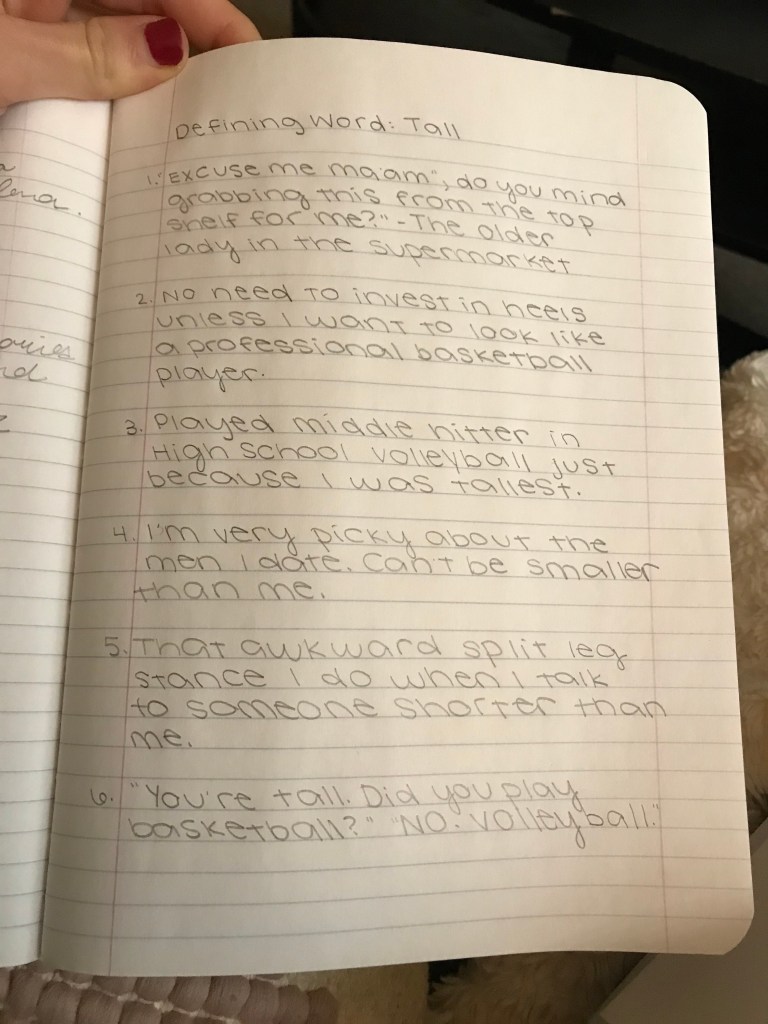
This was very easy for me to write because I used Amy’s writing as a mentor to my own. When I am reading Amy’s book, Textbook, I have come across so many things in the book that make me chuckle and think ‘It’s good to know I’m not the only one to feel this way.’
Where I’m from by George Ella Lyon is a format that I am very familiar with. Last year, in student teaching, I complied a poetry unit expanding across the different genres of poetry. It spanned from verse, cinquain, rhyme, haiku, narrative, and free verse. When I taught students about free verse, I used George Ella Lyon’s example ‘Where I’m From’ as a mentor text. Before I had the students fill out their own free verse poem, I modeled creating my own in the front of the room. This way, they were able to understand what it meant when the poem said ‘Everyday household item’ or ‘family traits.’ When students were done finalizing their poems in their writers notebook from each day, I had them create their own ‘Poetry Portfolio’ for them to share at our 5th grade ‘Poetry Cafe’. The poetry cafe took place on Parent Night. Here, the students were encouraged to read their poetry in front of the room for all 5th grade parents to hear.
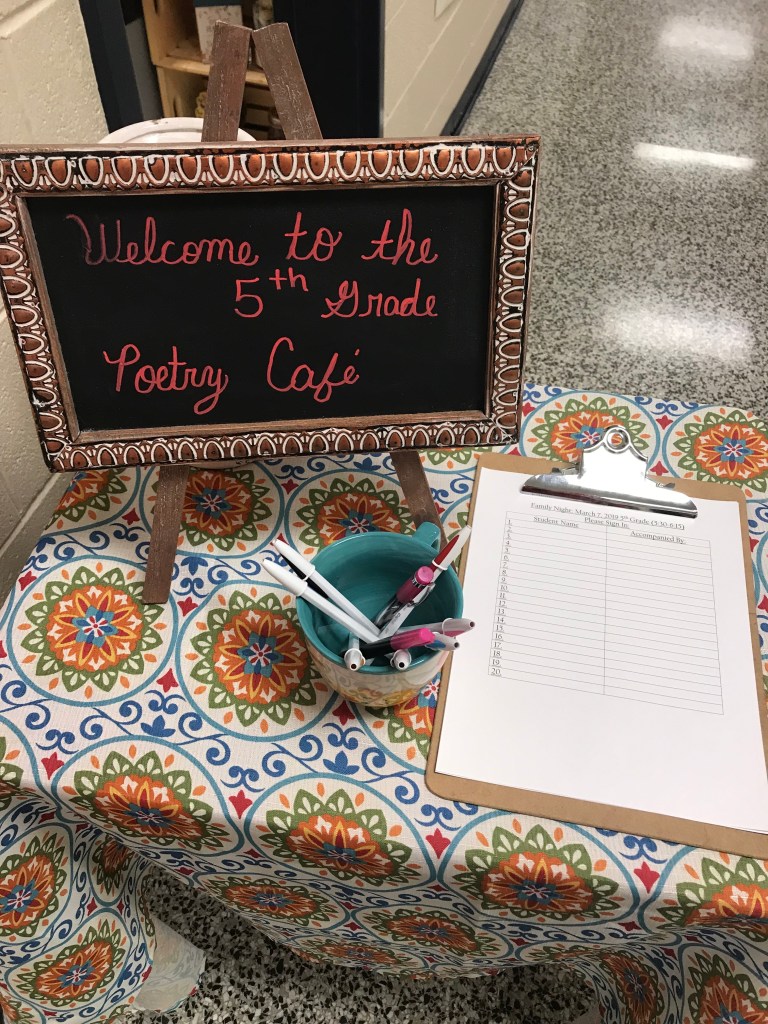
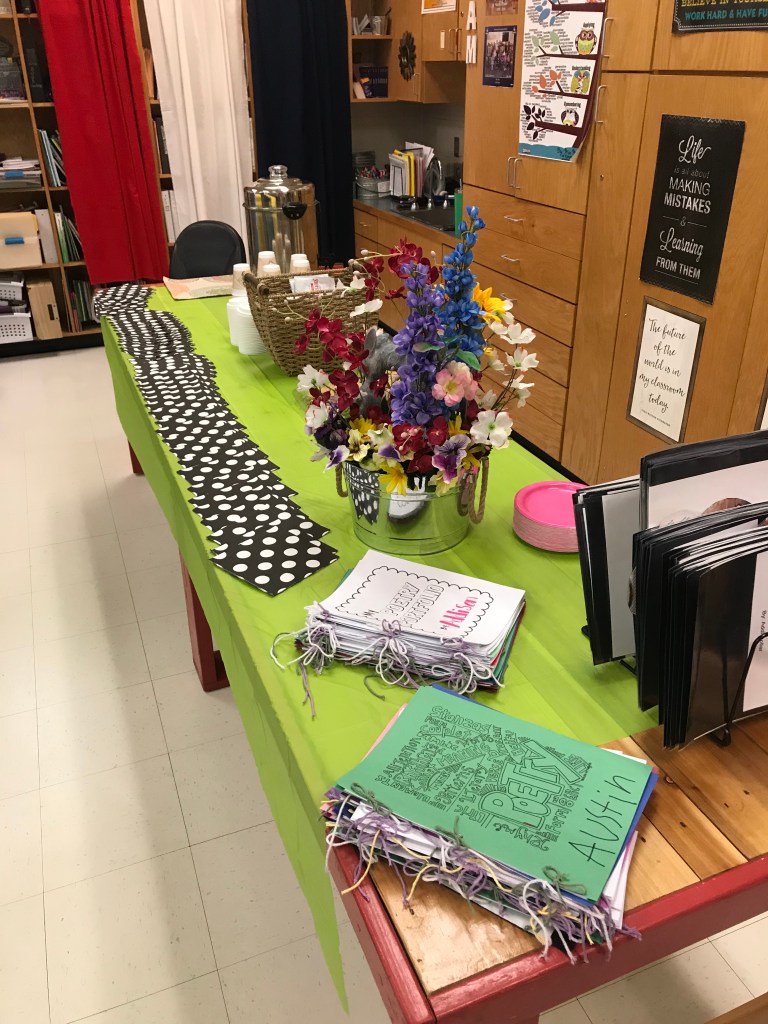
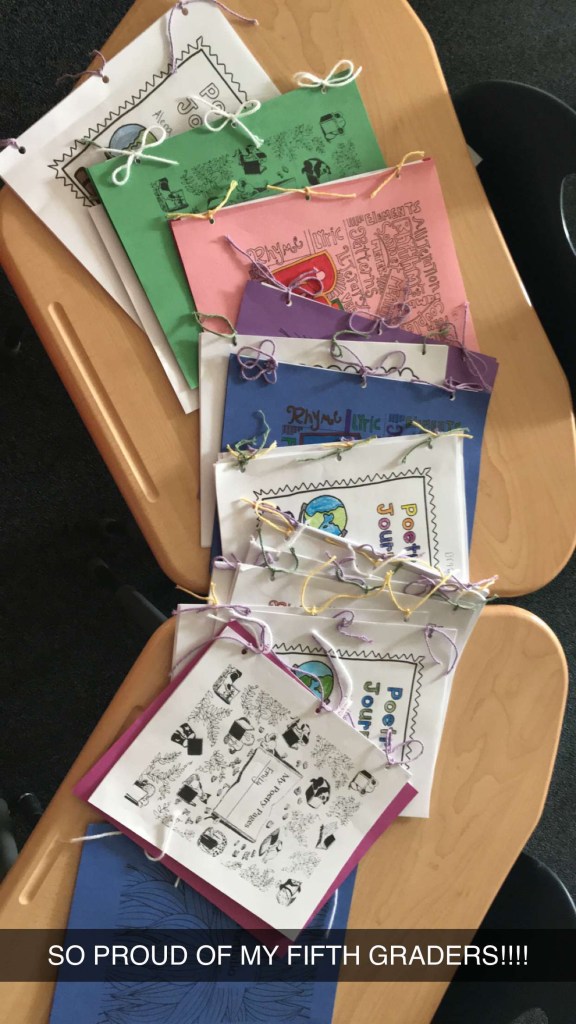
Here is a link to my poetry lesson that I did with my 5th grade students in student teaching.
One thing that I find really interesting is how my ‘Where I’m From…’ poem has changed over the course of one year. Below, I have two ‘Where I’m From…’ poems. The first is the one that I created as a model for my 5th grade class when I was student teaching (February 2019). The second ‘Where I’m From…’ poem is the poem that I created for my writer’s notebook in February 2020.
Where I’m From: Ms. Smith’s Example
February 2019

I am from chocolate,
from windex and
Kelloggs.
I am from the dog hair filled carpet.
I am from the willow tree in my backyard
the onion plants I used to pick.
I am from early christmas mornings
and loud, booming voices.
from Jane Smith
and Tim Smith and
Ellie and Ruby.
I am from the elaborate family dinners
and dessert every night.
From “This too shall pass”
and “Make your bed!”
I'm from Buffalo, New York, homemade spaghetti sauce and belgian waffles on saturday.
From the time I was told I was going to be a big sister
the excitement
and the jealousy of losing the attention.
I am from attic of old photo albums
and
I am from the Smith Family, Charlotte, NC
Where I'm From...
By Abby Smith
February 2020

I am from my robe
from Jif Peanut Butter and Land of Lakes Butter
I am from the apartment in the top right corner
I am from the loud dinner conversations
from climbing the tress and from the dog hair covered carpet
I am from the willow tree in the backyard that we used to climb
the tall sunflowers that used to grow in the Spring
I am from the Christmas Eve Appetizers
and huge feet, from Tim and Jane
I am from the loud, powerful voices of leaders
and early bedtimes
From "This too shall pass" and "Don't forget to say your prayers"
I'm from Jesus Christ and family over everything
I'm from the time we moved from New York to Ohio, then to North Carolina
from homemade spaghetti sauce and mom's famous biscuits
From the many family memories made at Bald Head Island
I'm from the old VCR tapes upstairs in the attic
Throughout the two poems, there are some similarities, but there are more differences. These similarities and differences inspire me as a teacher to do this with a class. You can draft the first one at the beginning of the year, and a second one at the end of the year to see how far they have come as writers and individuals. Then, when they see a visible difference between the two, the students can write about those differences and compliment their growth as a writer.


