Both ‘The Girl and the Wolf’ and ‘The Wild Robot’ are books based on the foundation of courage, self-determination, and friendship in unlikely places.
The Girl in ‘The Girl and the Wolf’ discovers that courage and determination has always been within her. However, it took the Wolf’s questions and guidance for her to discover it within. At the end of the story, the Girl can consider the Wolf a friend because of his help.
Roz was programed for survival. She always had the courage and determination within. However, it was because Roz channeled her courage and determination for the common good that friendship was found. Even the most unlikely friendships were formed (Robot and nature).
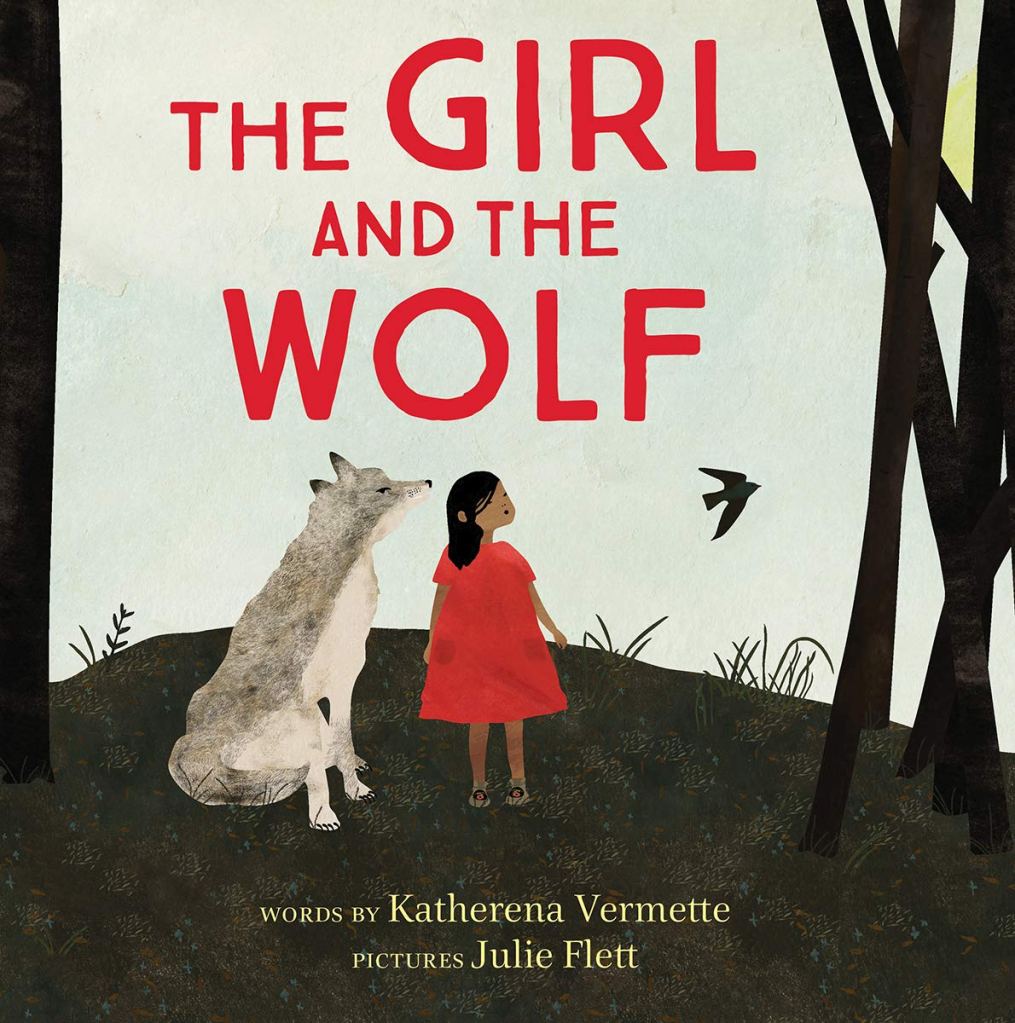
‘The Girl and the Wolf’
The girl smiled. She was glad the wolf had been the helping kind.”
-The Girl and the Wolf, Vermette
‘The Girl and the Wolf’ by Katherena Vermette is a nontraditional take on a traditional story. In literature, it is common for the wolf to be known as a “bad” character. However, in Katherena’s twist on ‘Little Red Riding Hood’, the wolf is a kind, gentle, creature that leads the girl safely to her mother. Katherena got her inspiration for the friendly wolf while reading European literature. She didn’t think it was fair for the wolf to always be seen as the “bad guy” in text.
While picking berries with her mother, the young girl gets lost and separated. With the help from the wolf, the young girl stops panicking and develops knowledge and confidence that she needs to navigate herself back. However, the wolf provides no answers to the young girl’s questions. The wolf is guiding the child but never giving her the answers outright. When caught in a stressful situation, she listens to sound advise and thinks her way to safety.
In this story, the wolf is a character that is marginalized. When he approaches the girl, she is frightened. She makes it known to her mother that she was “afraid he was going to hurt me.” However, in the text, the wolf is seen as a friendly character that is determined to help the girl that is lost in the woods. This portrayal of the wolf has suppressed the stereotypical behavior of the wolf in literature. Typically, he is seen as a vicious character that hurts the young girl. In this book, the Wolf that the choice to make the girls life better. Through his questioning and guidance, the little girl realizes the knowledge and confidence she needs to return to her mother.
The underlying theme and message of the text is that when faced with a stressful situation, relax, listen to sound advice, and be confident in thought. Just as the little girl did with the Wolf’s sound advice.
The author doesn’t explicitly present cultural ideas and markers within the book. However, Katherena Vermette and Julie Flett are Indigenous authors and illustrators. They took the European idea of fairytales and flipped it on its head. The limitations of fairytales were shattered when this book was published. Katherena Vermette is an #OwnVoices insider. She is a minority, Indigenous, fairytale, author. Typically, fairytale books are written by White, European authors. However, Katherena Vermette is a Metis writer from Treaty One territory in Canada. Katherena shattered the typical stereotype of European authors writing traditional fairytales. Just as the wolf shattered the typical stereotype of wolves being harmful and mean.
Vermette, K., & Flett, J. (2019). The girl and the wolf. Penticton, British Columbia: Theytus Books.
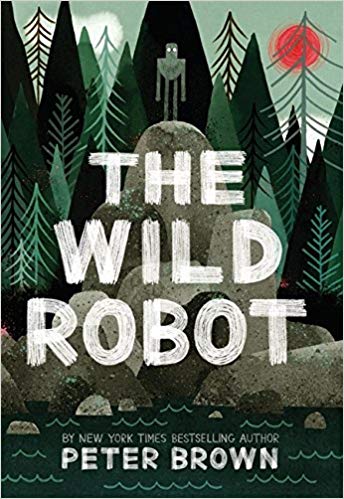
‘The Wild Robot’
As the robot looked out at the island, it never even occurred to her that she might not belong there. As far as Roz knew, she was home.”
-The Wild Robot, Peter Brown
When Robot, Roz, opens her eyes for the first time, she realizes that she is alone on an island. She is surrounded by remains of other dead robots around her. It is up to Roz to survive and co-exist with the animals on the island. The setting is essential to the plot of the book. It is the implantation of artificial life into nature. The setting provides for a battle of technology vs. nature.
At first, the animals do not know what to think of Roz. They are terrified of her, and even call her a monster. However, Roz knows that her purpose is to find better ways of doing what she already does. However, this is going to be a challenge since the animals on the island are terrified of her. Throughout the course of the story, Roz is marginalized. She is classified as a “monster” because she is different and artificial than those that live on the island.
Roz learns alot through her observations of the animals. She learns to camouflage and speak with the animals. One day, Roz comes across an injured Fox. Despite his concerns of Roz, she helps the Fox, thus earning his friendship. From this moment on, the animals on the island start to love Roz. Roz has the power to make the island a better world for those that inhabit it. If Roz refused to help those on the island, the island would have been a hostile and misunderstood place for all inhabitants.
Roz builds relationships on the island by helping with tasks, constructing lodges for winter, and fostering a baby goose named, Brightbill. Roz self-proclaims herself as Brightbill’s mother. Roz is determined to help those around her. When the animals realize her helpfulness, the island starts to feel like home. Friendship is spread throughout the island.
Values that are throughout the course of the book are; courage, friendship, determination, and integrity. The animals on the island are aware of Roz being a “monster” and a robot. However, they are determined to love Roz and make her feel at home. This is an example of Peter Brown representing social consciousness. Roz shows courage in the tasks that she does for the animals, and her tackling motherhood. Through her courage, friendship arrises among the animals. They come to love Roz because of the integrity of her work.
Peter Brown is a well known author of many children’s books. Although he is not an #OwnVoices insider author, the book still does an excellent job of inclusivity of marginalized characters. Many individuals reading this book that might feel marginalized can read with the hope of inclusivity, when you don’t feel as if you belong.


