Poetry (noun): Something that we all have inside of us. It's in our students and in ourselves. Sometimes it disguised itself without rhyme, without sounding like a limerick. Poetry is found in the most unlikely of places. It's the way we speak to our loved ones every day and night. It's when children are tucked into bed, the first thing say to your partner or spouse in the morning. It's when we speak in a voice that is exclusively ours. It's natural. We aren't trying to be anyone but ourselves.
-Georgia Heard, Awakening The Heart
After reading the class texts, my views of poetry have changed a little. Firstly, it went from a systematic definition to a real life application. I was able to see where poetry is in my everyday life. Georgia Heard gave me a deeper understanding of my personal feelings about reading poetry, writing poetry, teaching poetry, criteria for a good poem, and how I could create my own “poetry environment” in my classroom. Upon exploring Georgia Heard’s website, I discovered that she is an avid poet writer. She sees poetry ALL around her. Not only in the classroom for students to explore.
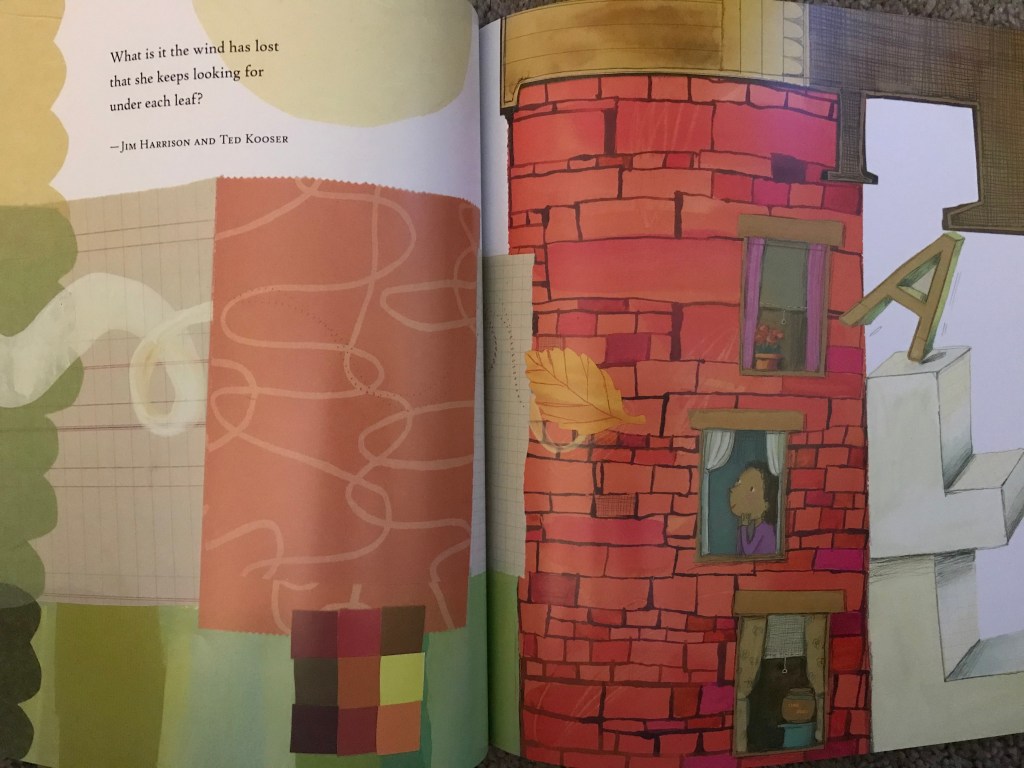
After reading Firefly July and All the Small Poems and Fourteen More, I was tickled by two poems in particular. The first one was in Firefly July. This poem is on the first page of ‘Fall.’ It is written by Jim Harrison and Ted Kooser. I think that this would be a great mentor poem for children to see before they start writing poetry to communicate with them that poems sometimes can be one thought/ sentence. I liked this poem the most out of this book because it gave meaning to something as common and simple as wind. It is giving the wind personification, as if she has lost something in the environment. This poem made me feel inspired to see what else I would personify in the environment.
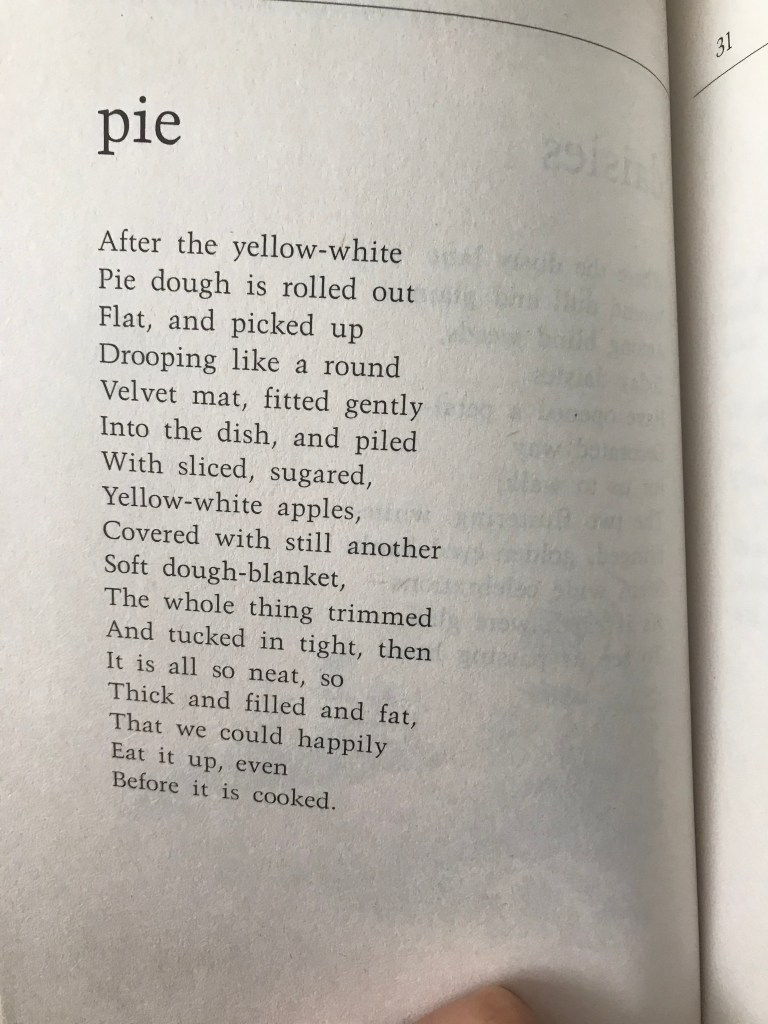
In All of the Small Poems and Fourteen More, I was inspired by many poems. However, the one that I found to be most pleasing to my ears was ‘Pie.’ The strong description words that the author used in this poem such as ‘velvet’, ‘dough-blanket’, and ‘tucked in tight’ helped me visualize the process of creating a pie. This poem especially reverted me back to my younger days in which my siblings and I would make a pie for thanksgiving with my mother. When she wasn’t looking, we would sneak bites from the toppings. We too would “Eat it up, even before it is cooked.” I think I like this poem so much because when I visualize the words, I am visualizing my own, very happy, experiences.
When it comes to writing poetry, I know that poetry hides in the most unexpected places. I think that I overthink the process of writing poetry more than I should. I am scared to write poetry because of my lack of creativity. However, poetry hides in the everyday places and things in our lives. I think that Georgia Heard’s doors of writing poetry are very useful of writing poetry in my own life…
1. Absorb. Be like a sponge. You can't just walk around and not notice things if you're going to write poetry. You have to notice everything.
2. Make things look different. You have to look at things in a different way-not the way you usually do.
3. Use 4D. When you write poetry you leave the three dimensions- and go to the fourth dimension.
To create a “Poetry environment” in my classroom, I like Georgia Heard’s idea about the poetry doors. I also think that these doors are a positive and uplifting way to teach poetry. These doors act as invitations to allow students to step inside. The five doors invite all students to step over the threshold. I think that these doors are a less intimidating way to introduce children to poetry.
Heart Door: Poetry is the genre of the inner life, therefore, the first, and most important, poetry door is the door of our hearts. Students are encouraged to write poems about what they feel is true. It is their inner images of grief, sorrow, rage, happiness.
Observation Door: The door of our eyes. It is what we observe, what we are amazed by, what's beautiful in the world.
Concerns About The World Door: Poems can be about what we read in the newspaper or about what world events we watch on television- what we are concerned about: war, people, who have to live on the streets, or floods in the midwest.
The Wonder Door: Questions can be a lever for a poem. Do you have questions about the world? You lives? What you're studying? The universe?
The Memory Door: Memories drift in and out of our minds all day long. The memories are just as vivid and sometimes profoundly sad.


